
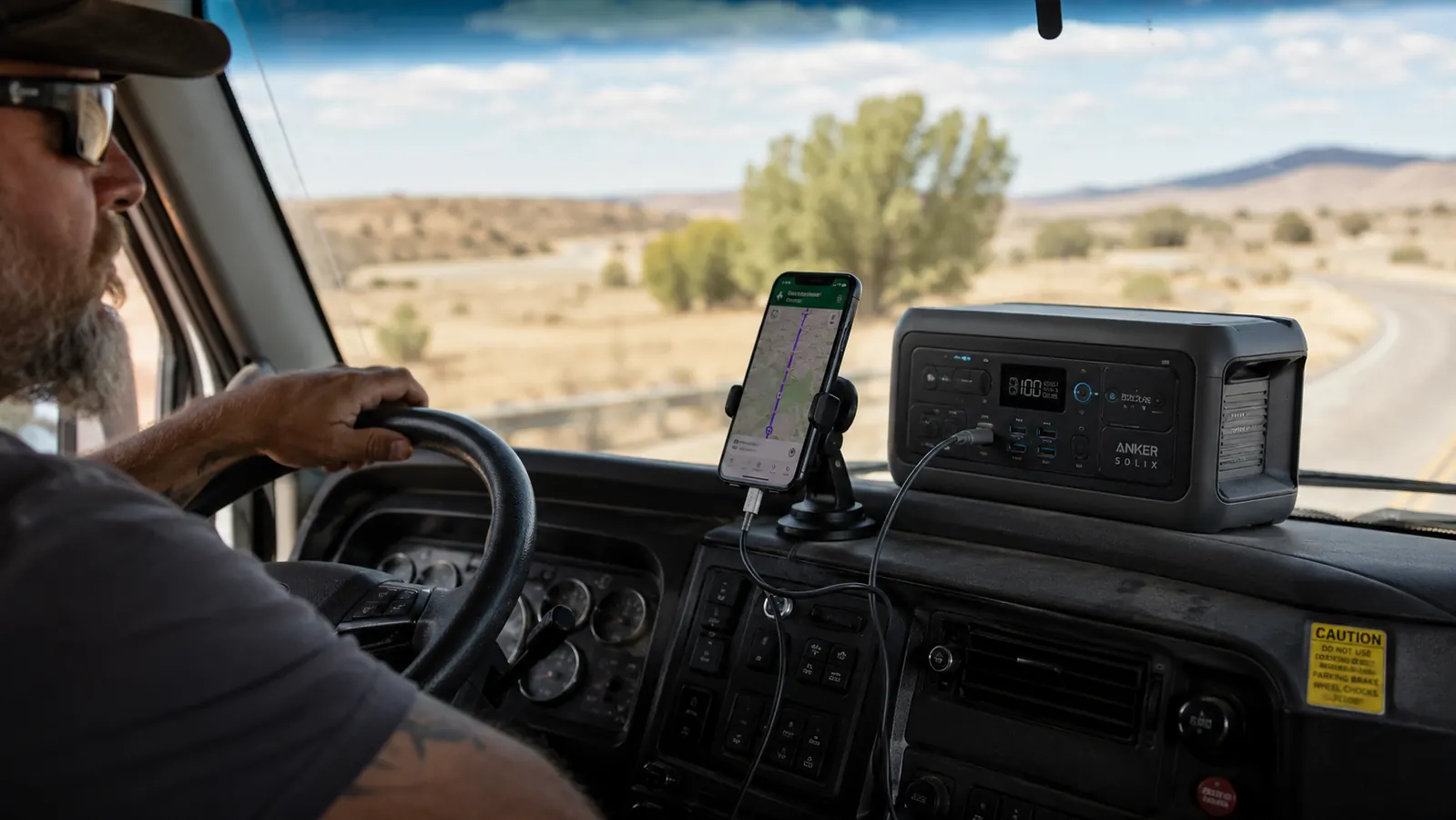
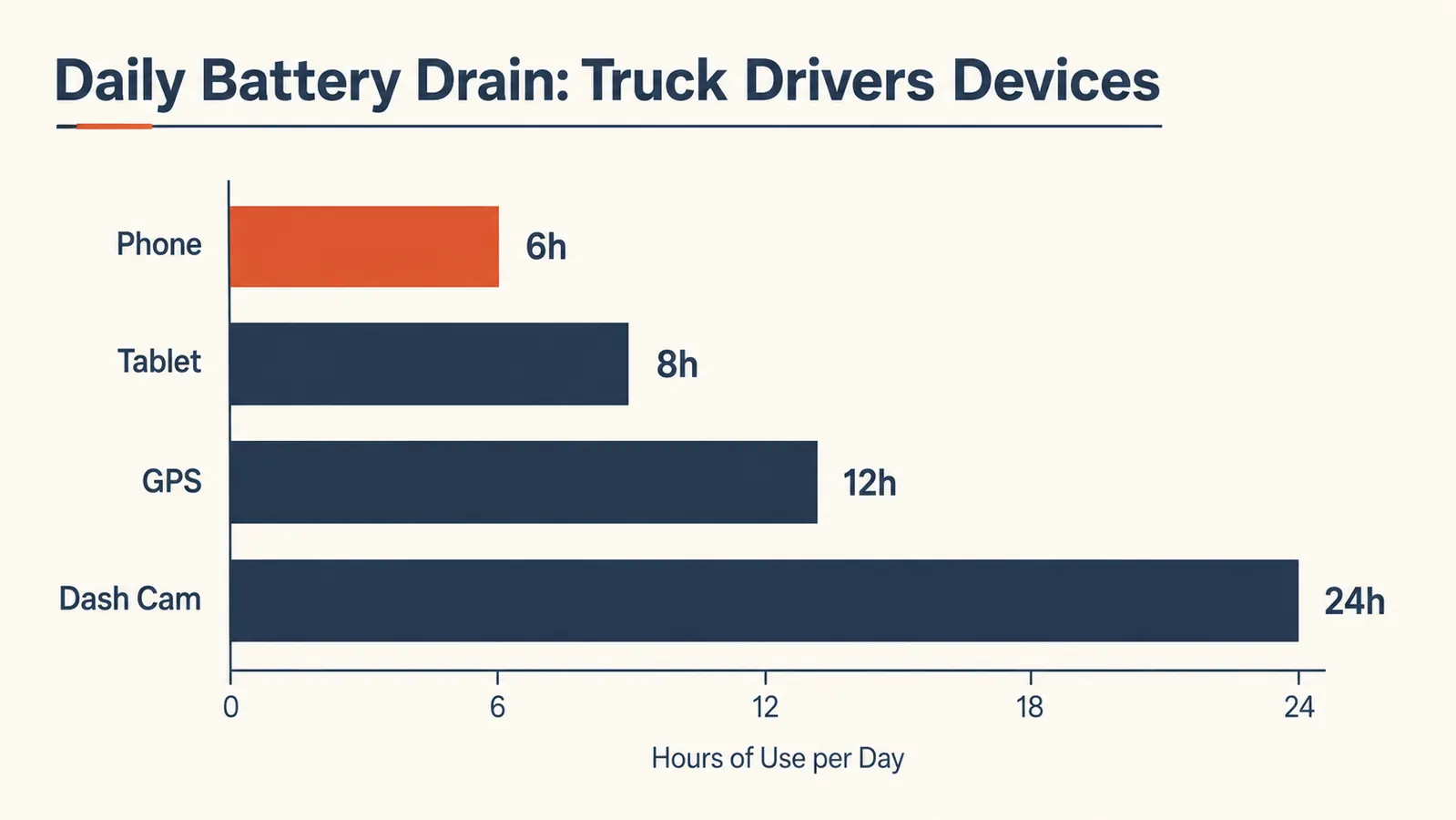
I run the I-40 corridor between Memphis and Albuquerque four times a month. I carry four devices in the cab: a Samsung Galaxy, a 10-inch tablet for dispatch, a Garmin dēzl GPS, and a dashcam that never stops recording. The Anker Zolo power bank -- 20,000mAh with a built-in USB-C cable -- sits right on my console between the cupholder and the CB. It has gotten me out of more jams than I can count, and I am going to tell you exactly why a high-capacity power bank is not optional for anyone who lives behind the wheel.
If you are still relying on the 12V cigarette lighter port alone, you know the problem. One port, four devices, and the truck's alternator is not keeping up when you are parked for a 10-hour reset with the engine off. A good power bank fixes that. Here are the 10 reasons mine earns its keep every single run.
Your 12V port is not enough. Here is the fix that fits in a cup holder.
The Anker Zolo 20,000mAh packs 30W fast charging and a built-in USB-C cable into a form factor that slides between the seats. Over 25,000 truckers, travelers, and road warriors have reviewed it. Check the current price on Amazon.
Amazon Check Today's Price on Amazon →Your GPS dies right when you need it most
I lost GPS signal on the I-40 outside of Amarillo once and tried to reroute while the battery icon blinked red. That is not how you want to find out your cigarette lighter cable is flaky. A power bank sitting on the console means the GPS stays plugged in and topped off no matter what the truck's electrical system is doing. The Anker Zolo has enough juice to fully charge a Garmin dēzl roughly eight times over. Navigation stays alive.
The 10-hour reset with engine off drains everything
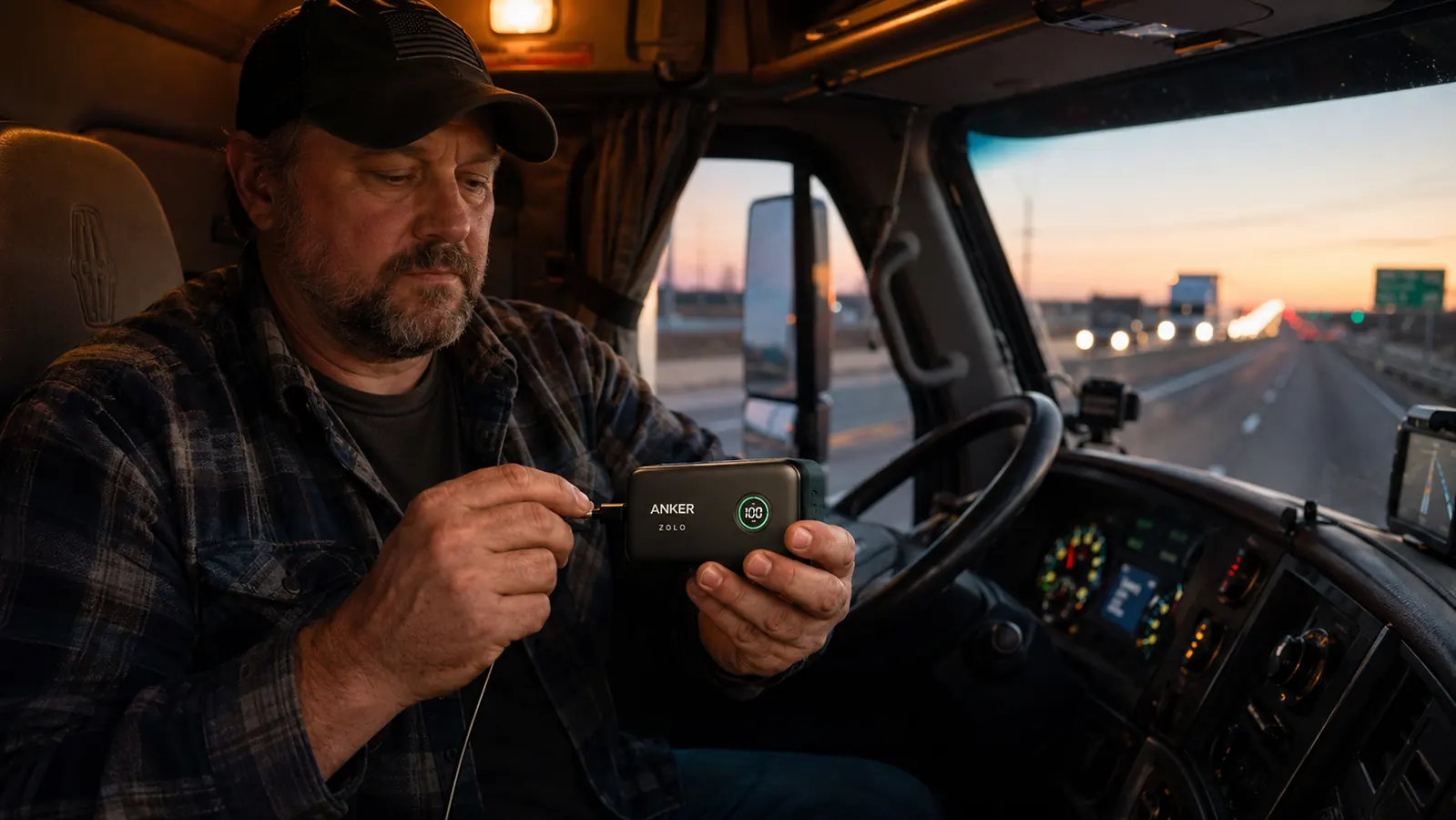
Regulations require a 10-hour break, and I take mine at a truck stop in Oklahoma where the shore power hookups cost extra. So the engine goes off and my phone, tablet, and GPS all start draining from whatever charge they built up during the drive. By hour six, at least one device is dead. The power bank bridges that gap without running the engine or paying for a hookup.
30W fast charging means a dead phone is not dead for long
Regular 5W USB trickle charges are close to useless when you are in a hurry. The Anker Zolo pushes 30W through USB-C, which gets a Samsung Galaxy from 15% to around 70% in under 45 minutes. I have plugged in at a weigh station, sat for an hour while the inspector did his thing, and left with a full battery. That speed matters when your window is short.
The built-in USB-C cable means one less thing to lose
I have lost four charging cables in three years. They fall behind the seat, they melt on a hot dash, they get left at a Flying J. The Zolo has a USB-C cable built into the body of the unit. It pulls out when you need it and tucks back in when you do not. I have not replaced a cable since I switched to this power bank, and that alone has more than paid for the thing.
Four devices, one power bank, zero dead batteries across an 1,800-mile run. That is the whole argument.
You can charge two devices at once
The Zolo has a USB-C port and a USB-A port. So I run the built-in cable to my phone and plug a short cable from the USB-A port to the tablet. Both charge at the same time. The output splits intelligently so neither device gets starved. When you are pulling back-to-back nights and both devices are at 20%, being able to charge them simultaneously is not a luxury.
Truck stop power outlets are not always where you need them
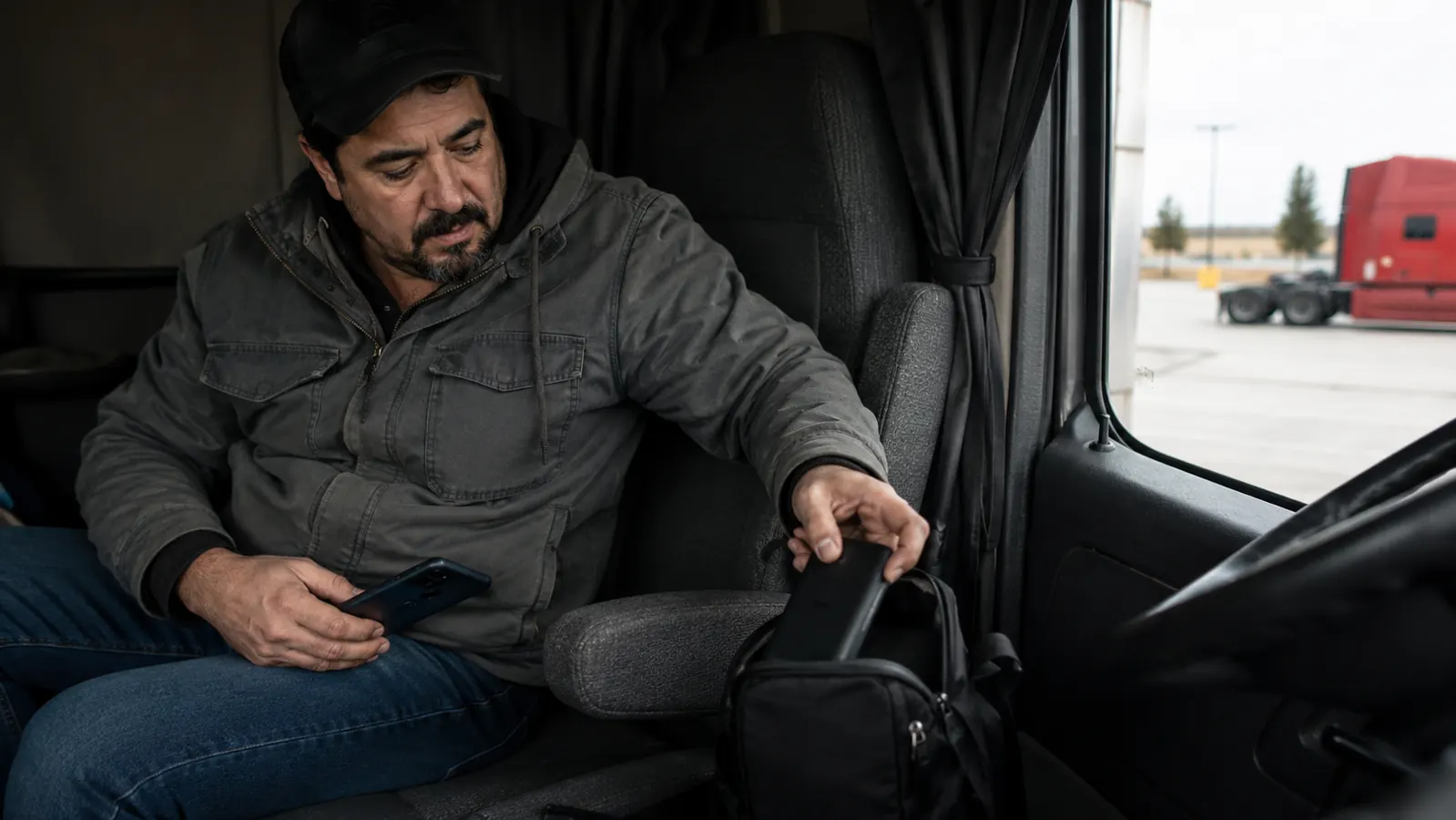
Every trucker knows this: the one open outlet in the Pilot is behind a garbage can next to the men's room, and the cord barely reaches. With a power bank, I charge it overnight in the cab and carry a fully loaded unit wherever I go. I can sit anywhere in the stop, eat, do my logs, and charge my phone without fighting for an outlet.
20,000mAh goes multiple days between recharges
On a typical two-day run, I drain my phone about 1.5 times per day -- so roughly three full charges needed. The Zolo holds enough capacity for five to six full phone charges, which means I can go two days of normal use without ever thinking about recharging the bank itself. On shorter runs, I sometimes go four or five days between charges. That is the right ratio for how this tool actually gets used.
It is Anker -- the thing actually holds up
I have gone through two no-name power banks in the past five years. Both stopped holding a charge around the 200-cycle mark. Anker has been making battery products since 2011 and backs the Zolo with an 18-month warranty. After eight months of daily use on my end, the unit still hits the same indicator LEDs at the same points. No swelling, no heat issues, no sudden drops in capacity. Brand reputation matters when the tool is mission-critical.
It fits where a water bottle fits
The Zolo is about the size of a thick paperback book. It fits in the driver-side door pocket, in a large cupholder, or in the top compartment of most day bags. I keep mine wedged between the center console and the seat. It does not roll around, does not take up real estate I need for other things, and weighs about a pound. For a device that does this much work, that is a reasonable footprint.
The piece of mind is worth it on its own
I stopped worrying about battery levels somewhere around month two of using this power bank. Before, I was making micro-decisions all day: should I stream music or save the battery? Should I call my wife or wait until I find an outlet? That mental load is gone now. I know the bank is charged. I know the phone is covered. I can focus on the road, which is the job.
What I'd Skip
A 10,000mAh bank is tempting because it is cheaper and lighter. I owned one for two years. It got me through a single day fine but fell apart on back-to-back runs. You spend more mental energy managing the charge than you save in price. If you are on the road more than two days at a stretch, the 20,000mAh capacity is the right starting point -- anything smaller and you will be nursing it.
I would also skip the cheap generic brands on Amazon with 4.1-star ratings from 200 reviews. Lithium cells degrade, and budget cells degrade fast. The few extra dollars for an Anker is cheap insurance when your GPS and phone are what stand between you and a wrong turn at 2am outside of Flagstaff.
A 10,000mAh bank gets you through one day. A 20,000mAh bank gets you through the whole run.
If your phone has ever died mid-route, this is the fix.
The Anker Zolo 20,000mAh is built for exactly the kind of multi-day, multi-device power situation that every trucker deals with. 30W fast charging, built-in cable, dual ports. Check what it is selling for today on Amazon.
Amazon Check Today's Price on Amazon →