

I pulled out of Jacksonville on a Tuesday in March with 3,014 miles ahead of me and a tailbone that already had opinions about it. I had been running long hauls for eleven years, and the factory seat in my Pete had slowly turned into what I can only describe as a foam-covered piece of sheet metal. My back used to just ache by Oklahoma. On that run, it had started hurting somewhere around Kingsland, Georgia -- maybe 130 miles in. That week I had finally ordered the Everlasting Comfort memory foam seat cushion off Amazon, and it had arrived the night before I left. I strapped it down, climbed in, and thought: well, we'll see.
I want to be upfront about something. I had tried two other cushions before this one. A cheap gel pad from a truck stop that started sliding every time I shifted my weight, and a firm foam wedge my buddy Terry swore by that just transferred the pressure from my tailbone to the back of my thighs. Neither of them lasted more than two states. I was not walking into this with a lot of confidence.
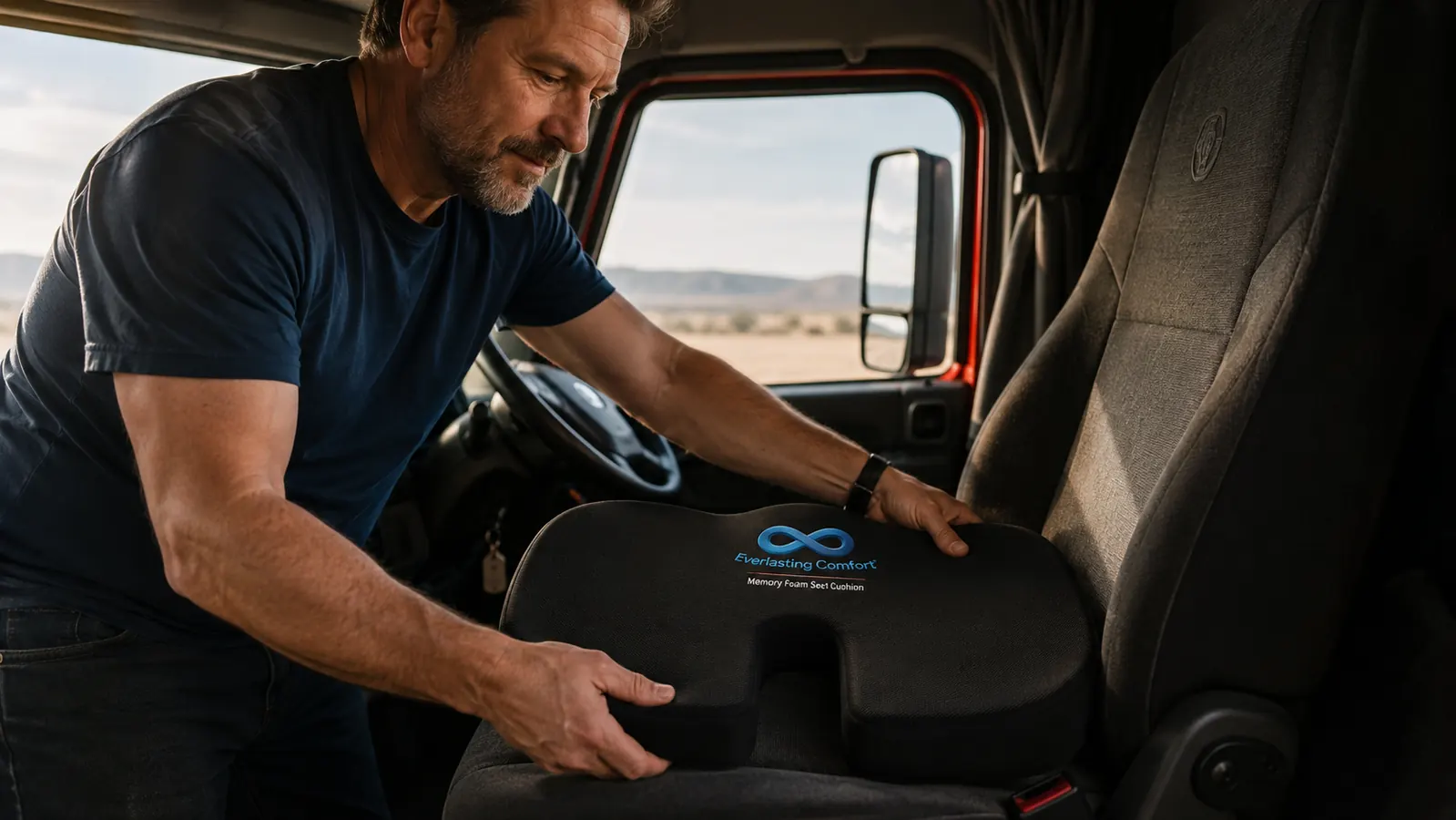
The Everlasting Comfort cushion is built around a U-shaped cutout in the back, right where your coccyx sits. That cutout is the whole point. When you're on a flat cushion for ten hours, you are essentially grinding that tailbone into foam and wondering why nothing helps. When the bone floats over a gap, the pressure goes away. Simple idea. First time I felt it work, I was somewhere on I-10 in Mississippi, maybe four hours in. I realized I had been sitting without shifting my weight for the last forty-five minutes. That does not happen to me.
I realized I had been sitting without shifting my weight for forty-five minutes straight. That does not happen to me.
The memory foam itself is denser than I expected. It does not bottom out the way cheap foam does. I pressed my thumb into it in a truck stop parking lot before I left, and it came back slowly, which is what you want. Thin foam gives you a second of cushion and then you are sitting on the substrate underneath. This stuff actually holds its shape across a full day of driving. By the time I crossed into Texas on day two, I was not thinking about my back at all. That is probably the best thing I can say about a seat cushion: I forgot it was there.
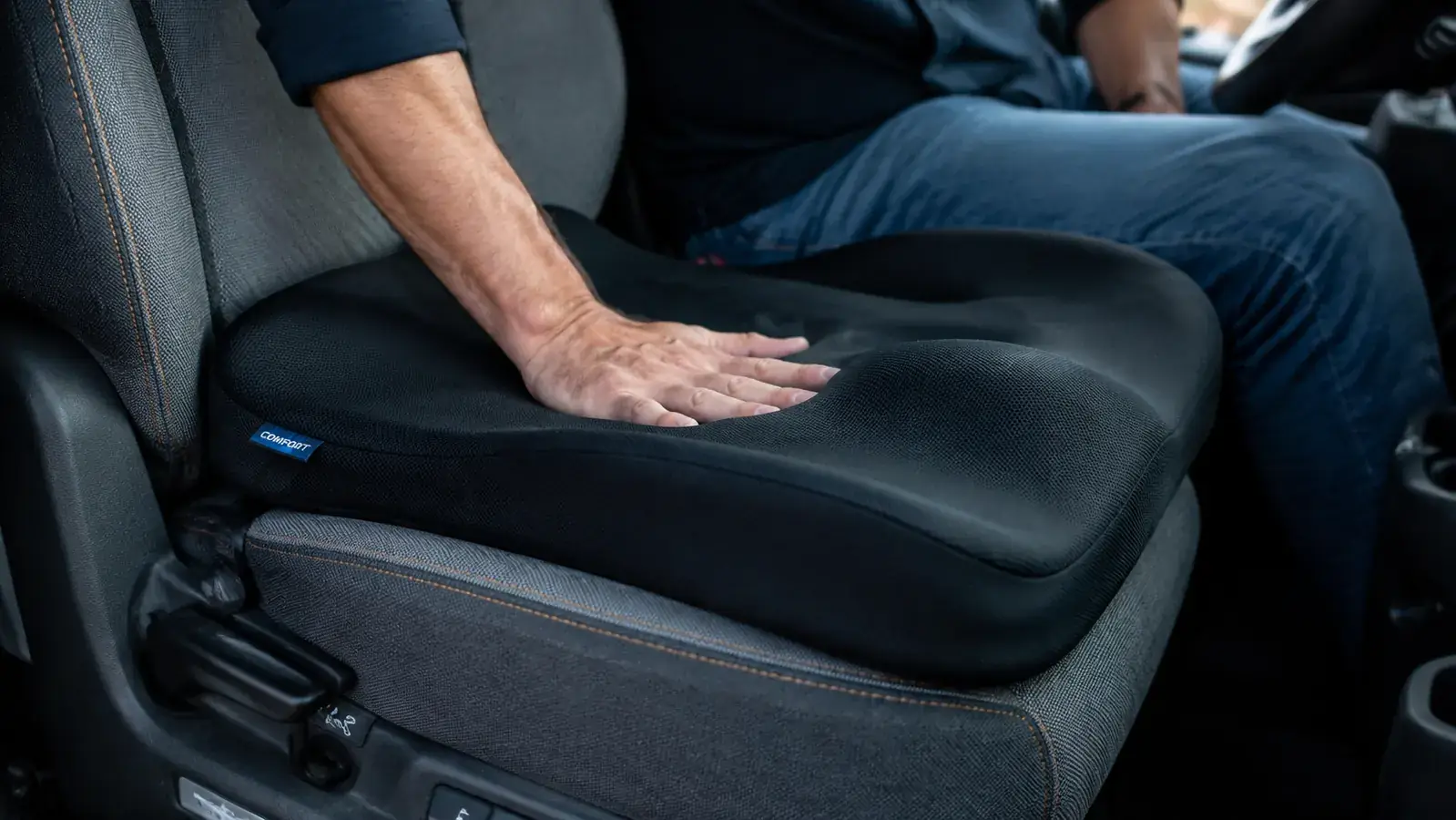
The underside has a non-slip rubber backing, and the whole cushion is held in place with two straps that loop around the seat back. Those straps matter. I spent six months fighting with a gel pad that drifted every time I leaned forward to check my mirrors. This one did not move. Through New Mexico, Arizona, and a stretch of I-5 going north through the California valley heat, it stayed exactly where I put it.
Your factory seat foam gave up. Your back has been telling you that for months.
The Everlasting Comfort cushion has over 123,000 Amazon reviews and a coccyx cutout that actually unloads the pressure where it hurts. Check today's price and what other long-haul drivers say about it.
Amazon Check Today's Price on Amazon →I did Portland and turned back east three days later. On the return leg I went north through Oregon and picked up I-84 into Idaho, then cut down through Utah and Colorado. Different surfaces, different temperatures, a lot of mountain grades where you are braced against the seat in a way that puts weird load on your lower spine. No new complaints. My hips were tired by Denver, the way they always are at the end of a long run. But the specific tailbone and sacrum pain that had been my constant companion for the last year and a half was just gone.
Now for what it does not fix. It is a seat cushion, not a posture solution. If you are sitting hunched over the wheel for twelve hours, your upper back and shoulders are still going to pay for that. The cushion handles the pressure points at your sit bones and tailbone. It does nothing for lumbar support -- I still run a separate lumbar pillow against the seat back. And after about six months of daily use, I notice the foam has compressed maybe ten percent from where it started. Still functional, still unloading my tailbone, but it is not as plush as it was on that Jacksonville run. How long before it needs replacing is a real question I cannot answer yet.

The cover is removable and machine washable, which matters more than it sounds. Seat cushions live in a truck cab. They collect road dust, sweat, and whatever you spilled the night before. Being able to pull the cover off and run it through a laundry at a truck stop has kept this thing in rotation when a non-washable version would have been in a dumpster six weeks in.
What I'd Tell You If We Were Sitting at My Kitchen Table
If your tailbone and lower back hurt every single run and you have never tried a coccyx cutout cushion, try one. This is the one I use. It made a real difference on my worst pain points, it has held up longer than anything else I tried, and the washable cover means it stays in the truck instead of getting thrown out. It is not going to undo eleven years of long-haul posture, and the foam will eventually need replacing. But for what it costs and what it does, I would buy it again without thinking twice. Check where the price sits today. If it is anywhere close to what I paid, it is a reasonable call.
And if you want more detail on how it holds up over time, I tracked it through a full six months in my longer review at the link below. The short version: the foam compression is the only thing I would change if I could.
Still skeptical? Over 123,000 drivers left reviews. See what they found after months of daily use.
The Everlasting Comfort seat cushion is still the one under me on every run. Check today's price on Amazon and read what other long-haul drivers say about how it holds up.
Amazon Check Today's Price on Amazon →