

I have driven more than 400,000 miles over the past twelve years and back pain has been my single biggest enemy on the road. The Everlasting Comfort memory foam seat cushion was the first piece of gear that actually made a measurable difference in how my back felt at the end of a 600-mile day. But a cushion alone is not a complete solution. Preventing back pain on long-haul drives takes a system: the right seat setup, the right posture habits, the right break schedule, and a few small moves most drivers never think about until their back forces the conversation.
I have tried chiropractor visits, lumbar braces, posture coaches, and a half-dozen different cushions over the years. Some helped a little. Some did nothing. What follows is what actually works after all that trial and error. If your back pain is severe, persistent, or shooting down your legs, see a doctor before anything else. What I am describing here is prevention and day-to-day management, not treatment for a disc injury or nerve problem.
Your factory seat is not built for 10-hour days. Fix the foundation first.
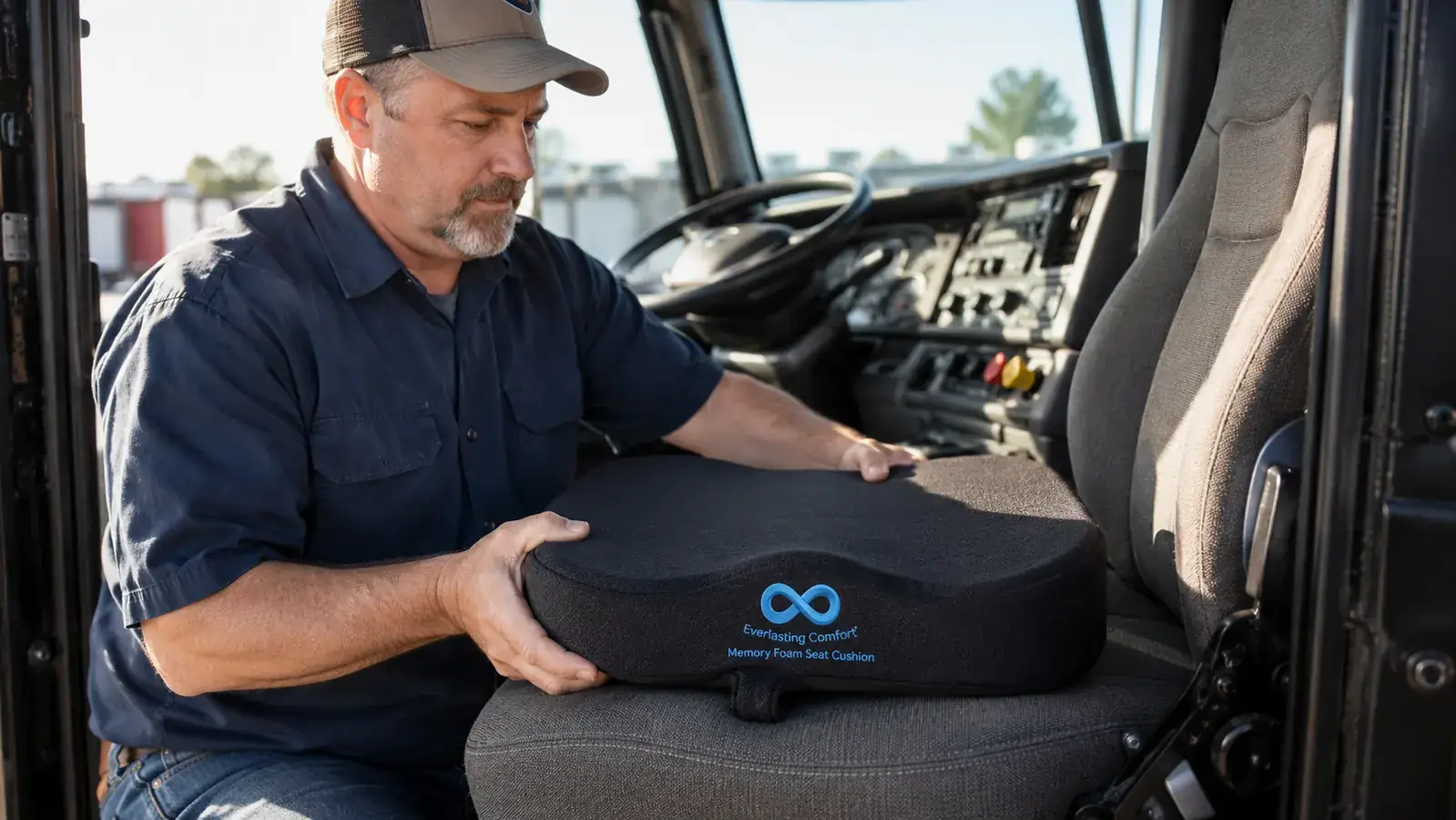
The Everlasting Comfort memory foam seat cushion with its coccyx relief cutout is the single upgrade that made the biggest difference in my cab. Over 123,000 Amazon reviews back that up. Check current availability below.
Amazon Check Today's Price on Amazon →Step 1: Fix Your Seat Foundation Before You Fix Your Posture
I spent years trying to sit with better posture in a seat that was working against me. The factory foam in most truck and car seats is designed for commutes, not for someone who will not leave the cab for six hours. After about two hours of driving, compressed seat foam stops returning support. Your pelvis tilts backward, your lumbar curve collapses, and the muscles in your lower back have to do all the work just to keep you upright. That is when the ache starts.
The fix I found was the Everlasting Comfort seat cushion, which uses high-density memory foam with a coccyx relief cutout at the back. The cutout takes direct pressure off the tailbone, which lets your pelvis sit in a more neutral, forward-tilted position. When your pelvis is level, your lumbar spine falls into its natural curve without you having to think about it. I noticed the difference within the first two hours of my first run with it in the seat.
One practical note: the cushion raises your seat height by about two inches. If you drive a car or SUV with a low roof line, adjust your headrest and mirrors after installing it. In a truck cab this is rarely an issue since headroom is generous, but it is worth checking before you hit the highway.
Step 2: Dial In Your Lumbar Support Position
A seat cushion handles the pelvis. Lumbar support handles the mid and lower back. Most truck seats have a built-in air lumbar bladder, and most drivers either inflate it too much or leave it flat. The right position is firm enough to feel, but not so firm that it pushes your torso away from the seat back. I inflate mine until I can feel gentle contact at the widest part of my lumbar curve, then let off one pump.
If your seat does not have built-in lumbar support, a rolled-up hoodie or a dedicated lumbar roll placed at belt-height works. The goal is to maintain the natural inward curve of your lower back rather than letting it round outward against the seat back. If your back is already pressing flat against the seat with no inward curve, you are sitting in flexion and your discs are under load every single mile.
Check the support position every time you restart after a break. You will shift around during a rest stop, get back in at a slightly different angle, and your lumbar contact point will change. It takes ten seconds to readjust and it prevents an hour of creeping ache later in the run.
Step 3: Set Your Steering Wheel and Mirror Positions to Enforce Good Posture
Here is something that took me longer than it should have to figure out: your steering wheel and mirror positions either support good posture or undermine it. If your steering wheel is too low, you hunch your shoulders and round your upper back to reach it. If your mirrors are aimed too close in, you crane your neck forward to see past your own blind spots. Both of those compensations load the spine.
Set your seat position first, sitting how you would actually sit for hour three of a run, not how you sit when you first climb in and are still comfortable. Then adjust everything else from there. Your elbows should have a slight bend when your hands are at the wheel, not a full extension. Your side mirrors should be angled so you can see the full length of the trailer with your head resting naturally against the headrest. If you have to lean forward to check a mirror, the mirror is aimed wrong.
Step 4: Run a Break Schedule That Your Back Will Actually Thank You For
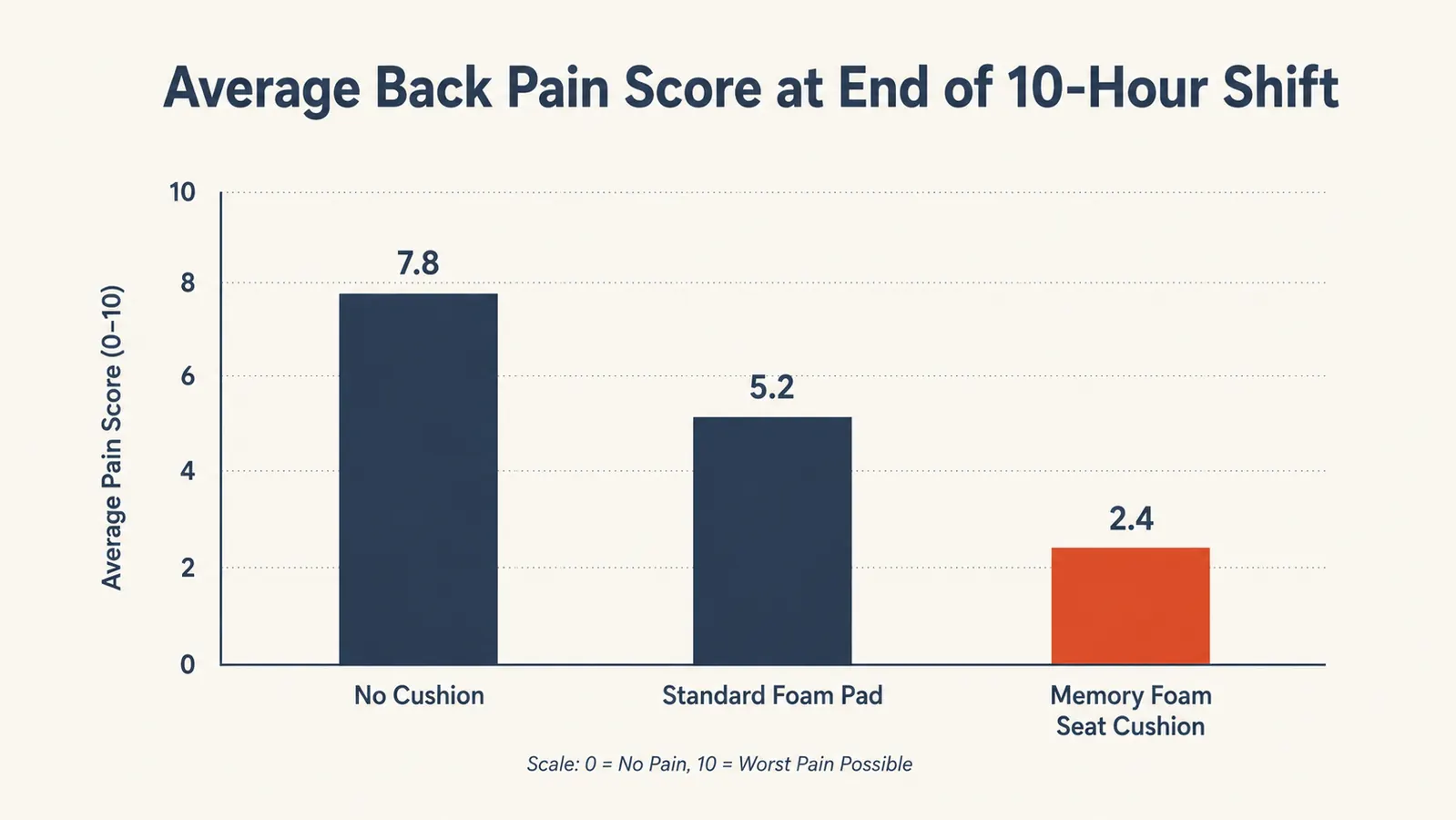
The single most effective thing you can do for your back on a long run costs nothing: get out of the seat every ninety minutes and move for at least five minutes. I know this sounds obvious, but most drivers push through to two-hour or three-hour intervals because stopping feels like losing time. I did it for years. My back eventually made the argument more convincingly than any physical therapist ever could.
When you stop, do not just stand next to the rig and scroll your phone. Walk fifty paces in each direction. Do five slow hip circles each way. Put your hands on your lower back and gently arch backward three times. These are not exercises, they are just the opposite movements from what you have been doing for ninety minutes. Sitting compresses the front of the discs and shortens the hip flexors. Walking and extending reverses that compression before it has time to lock in.
I set a timer on my phone. When regulations have me driving eleven hours in a fourteen-hour window, I set six break alarms at ninety-minute intervals. I lose maybe forty minutes across those breaks, but I also arrive at delivery without needing an hour to loosen up before I can back into a dock correctly. The math works out.
I set a break alarm every ninety minutes. I lose forty minutes total, but I arrive functional instead of locked up. The math works out.
Step 5: End Each Day With Two Minutes of Intentional Recovery
Your back is not going to recover overnight if you climb out of the cab, sit in a restaurant booth for forty-five minutes, and then lie down on a mattress your spine has not fully adapted to yet. The transition from driving to rest is when a lot of the stiffness sets in. I started a two-minute routine at the end of every run and it cut down my morning tightness significantly.
The routine: child's pose for thirty seconds, flat on your back with both knees pulled to your chest for thirty seconds, then standing hip flexor stretch on each leg for thirty seconds each. Total time is two minutes. You feel like an idiot doing it in a truck stop parking lot the first time. After a week you stop caring because it works. The child's pose specifically takes the lumbar spine into comfortable flexion after hours of extension-biased positioning in the seat, and the knee-to-chest hold decompresses the lower discs.
If you wake up stiff in the sleeper, do not push straight into a run. Give yourself five minutes of easy movement before you drop into the seat. Muscles and discs that have been still for six hours need a chance to redistribute fluid and warm up before you ask them to absorb road vibration for the next three hundred miles.

What Else Helps
Once you have the five steps above dialed in, a few more habits make a noticeable difference over a full season on the road. Hydration matters more than most drivers think. The discs between your vertebrae are mostly water, and they rely on you drinking enough to maintain that hydration. When you are dehydrated, disc height decreases and compression loads increase. I aim for at least half a gallon of water on any run over eight hours, which also forces me to stop more often.
Footrest position gets overlooked. If your foot on the accelerator is hanging at an angle, your hip is rotated and your pelvis tilts to compensate. A small wedge pad under the accelerator foot can level that out. Some drivers use a footrest block on the off-foot side to keep both hips level during cruise-control stretches. It is a minor thing but it matters on ten-hour days.
Finally, if you are sleeping in the cab, your mattress topper matters as much as your cushion. A worn-out sleeper mattress creates the same problem as a worn-out seat: you spend eight hours in flexion instead of neutral, and you start the next day already behind. A firm-to-medium memory foam topper in the two-to-three inch range is worth the investment if your back is a recurring problem. And again, if your pain is severe, radiating into your legs, or not improving with any of these changes, see a doctor. Lower back problems that get ignored on the road tend to escalate.
If you start with one change, make it the seat cushion.
The Everlasting Comfort memory foam seat cushion with the coccyx relief cutout is what I put in my cab first and it is still there. It has over 123,000 Amazon reviews and it is the most-recommended seat cushion for long-haul drivers for a reason. Check today's price and availability on Amazon.
Amazon Check Today's Price on Amazon →